Protect Concrete in Autumn to Avoid Spring Repairs

Protect Concrete in Autumn to Avoid Spring Repairs

  1. ​The Main Enemy of Concrete in Winter: How the Freeze-Thaw Cycle Works?
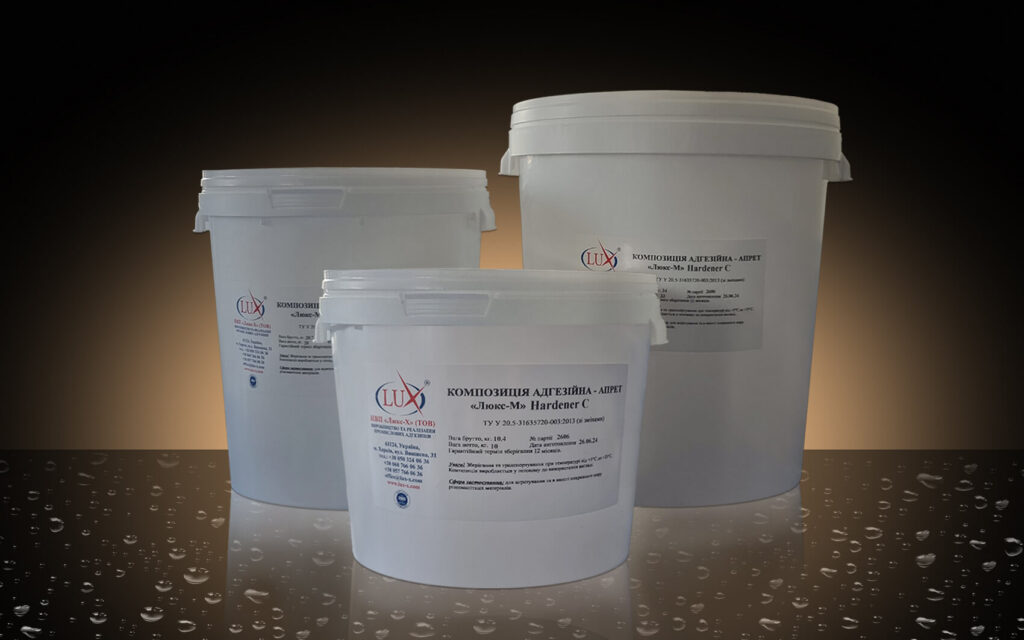
  2. ​How LUX-M Hardener C Sealer Works?
  3. ​Benefits of Treated Concrete Before Winter
  4. ​What Happens in Spring If You Don't Protect Concrete in Autumn?
  5. ​Tips for Applying Hardener C in Autumn
  6. ​Don't Wait for the First Frosts — Protect Concrete Today!

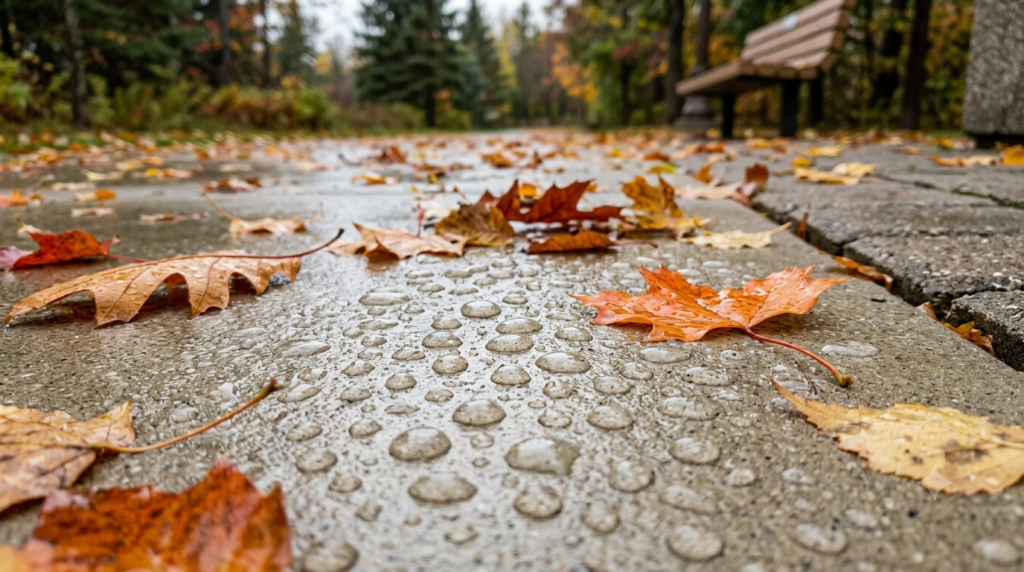
​Autumn is not only a time to sum up the construction season but also a critical period for preparing any concrete and mineral surfaces for winter conditions. Paving tiles, foundations, open balconies, terraces, service stations, and industrial floors are exposed to continuous rain, high humidity, and impending frosts throughout autumn.

​Why does concrete—a material that seems indestructible—damage quickly in winter without proper protection, and how does LUX-M Hardener C deep-penetrating water-repellent sealer save your investment? Let’s take a closer look.

​The Main Enemy of Concrete in Winter: How the Freeze-Thaw Cycle Works?

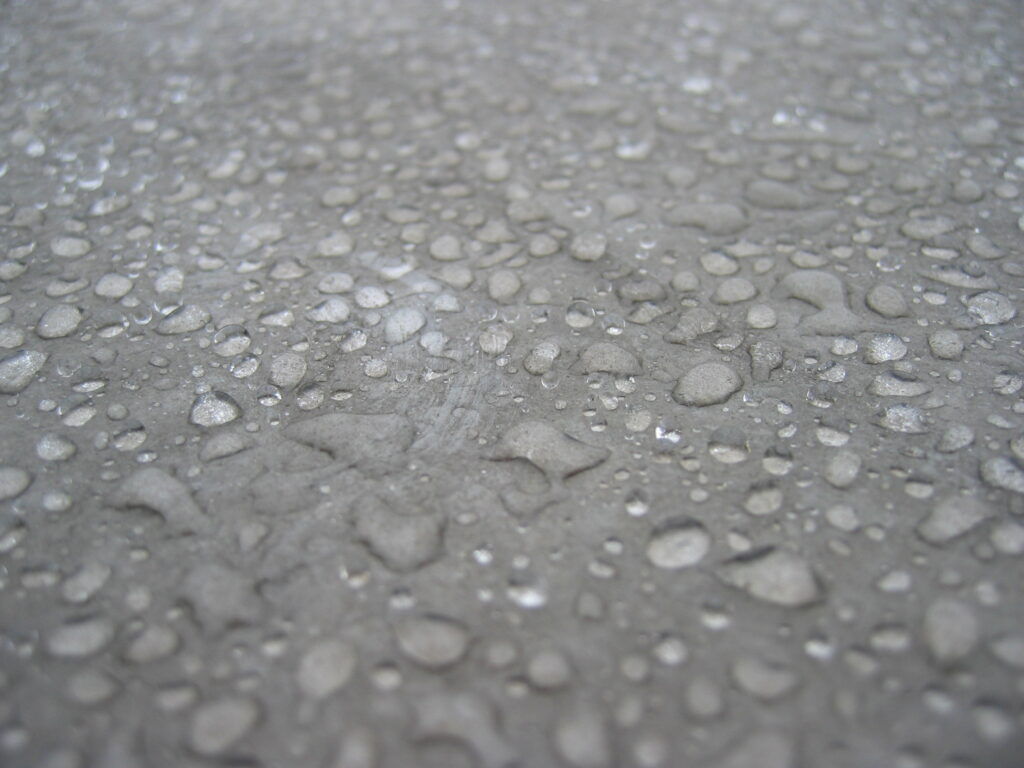
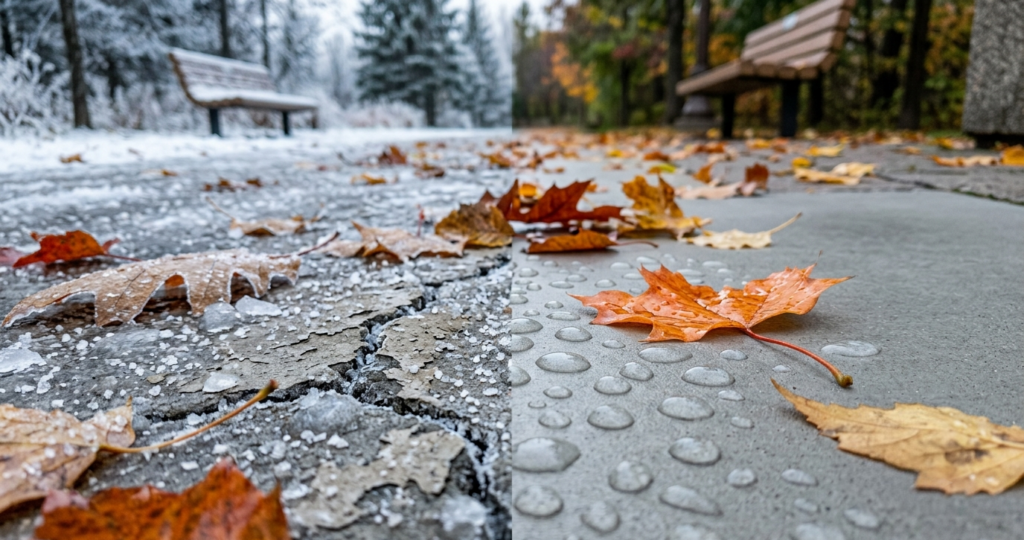
​By nature, concrete has a porous structure similar to a sponge. In autumn, during heavy rainfall, these pores fill with water.

​When the temperature drops below 0 °C, freezing water expands in volume by approximately 9%. This creates immense internal pressure within the concrete structure, breaking its micro-bonds. In spring, after dozens of freeze-thaw cycles, you face a discouraging result:

  • ​The top layer peels and crumbles.
  • ​Deep cracks and potholes appear.
  • ​The surface generates dust actively and loses strength.
  • ​Paving tiles lose their aesthetic appearance, and joints wash away.
Зображення до контенту

​How LUX-M Hardener C Sealer Works?

​Unlike regular paints or varnishes that create only a temporary surface film, Hardener C is a deep-penetrating sealer based on silicates and modified acrylics.

​It penetrates deep into the pores of the material and reacts chemically with free lime in the concrete. As a result, insoluble crystalline compounds form inside the micropores. The sealer literally becomes an integral part of the concrete itself, modifying it from within.

​Benefits of Treated Concrete Before Winter

​Applying Hardener C in autumn provides comprehensive protection for concrete and mineral substrates:

  1. ​​Maximum Water Repellency and Frost Resistance. Filled pores stop absorbing water. No free moisture means no destructive ice expansion during winter.
  2. ​Surface Fortification. The sealer increases the grade strength and wear resistance of concrete, making the surface resistant to heavy traffic and pedestrian loads.
  3. ​Complete Dustproofing. The formula binds cement dust, making floors and outdoor areas clean and easy to maintain.
  4. ​Resistance to Washing Out and Chemicals. The formed crystals do not dissolve in water, so protection will not wash away with rain or melting snow. Additionally, the surface becomes more resistant to technical fluids and oils.
  5. ​Aesthetic Preservation. Suitable for plain concrete, concrete paving tiles, and joints, protecting them from destruction without creating a slippery film.

​What Happens in Spring If You Don't Protect Concrete in Autumn?

​Postponing treatment until spring is a common mistake. Unprotected concrete loses a significant portion of its lifespan during a single winter-spring transition:

  • ​Financial Costs. Spring repairs (demolition, re-screeding, tile replacement) cost dozens of times more than timely preventive sealer treatment.
  • ​Loss of Structural Integrity. A surface damaged by frost cracks loses its integrity, making it much harder to stop further degradation in the future.
Зображення до контенту

​Tips for Applying Hardener C in Autumn

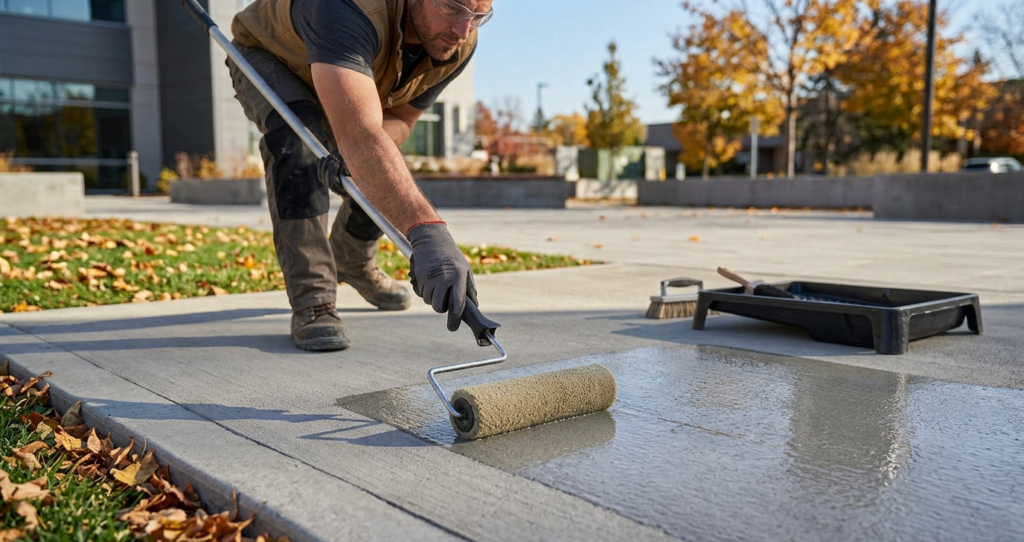
​To ensure 100% effectiveness, follow three simple rules:

  • ​Temperature. Apply in dry weather at temperatures between +5 °C and +30 °C.
  • ​Preparation. The surface must be dry and free from dirt, oil, and cement laitance (grind and dust-free if necessary).
  • ​Dry Weather. Apply when no precipitation is expected so the sealer can absorb completely and react.

​Don't Wait for the First Frosts — Protect Concrete Today!

​Take one simple step for the durability of your surfaces while autumn weather permits. Order LUX-M Hardener C penetrating sealer directly from the manufacturer, Scientific and Production Enterprise “Lux-X”.

​Protect your investment and ensure peace of mind all winter long!
​​👉 Go to the Catalog and Place an Order

​Need help calculating the required volume for your area? Our experts are ready to provide detailed advice and select the best solution. Call us: +38 (068) 766 06 36 or +38 (050) 324 06 36.

Olena Skotarenko

Author of the article:

Olena Skotarenko

Marketing Director of the SPE «LUX-X» (LLC)

Number of articles: 44

Articles you might like

Distinctive features and advantages of hot melt adhesive for industrial use

Distinctive features and advantages of hot melt adhesive for industrial use

Hot melt is applied for bonding all substrates used for different applications almost in every industrial field. It is extremely important to choose high-quality hot melt adhesive for gluing different materials.

Read article
Peculiarities of Starch Adhesive Application

Peculiarities of Starch Adhesive Application

Starch is a natural plant polymer. It is most often produced from corn, potatoes, and wheat. Due to its unique properties and specific characteristics, starch has found application in industrial production.

Read article
How to Сhoose a Hot Melt Adhesive?

How to Сhoose a Hot Melt Adhesive?

Today, let's talk about the hot melt or hot melt adhesive, its application and how to choose the right one so that it can effectively perform the work in accordance with the task at the enterprise.

Read article
Application of Casein Adhesive in Labeling

Application of Casein Adhesive in Labeling

Natural polymer adhesives or bioadhesives are products made from animal and vegetable raw materials.

Read article
Adhesives for Challenging Packaging Applications

Adhesives for Challenging Packaging Applications

The food packaging industry is home to a variety of packaging, from high glosses that boost shelf appeal to wax boxes that increase functionality. While these unique packaging materials offer a competitive edge in the food industry, they are much more difficult to adhere to and often require specialized adhesives.

Read article
Concrete impregnation agents: their definition, types and purpose

Concrete impregnation agents: their definition, types and purpose

Concrete is one of the most durable construction materials, which is why it is used to construct military and civilian structures, including shelters, industrial, commercial, administrative buildings, infrastructure, warehouses and residential buildings.

Read article
Vinyl and non-woven wallpaper: application rules of glue

Vinyl and non-woven wallpaper: application rules of glue

A big number of diverse materials for interior and exterior decoration of premises appear on the shelves of building centers every year, meanwhile, an assortment of construction materials for repair work has been rapidly increasing.

Read article
How to use a hot glue gun

How to use a hot glue gun

The hot glue gun is a tool used for gluing parts with the help of hot melt glue sticks. The hand-held hot glue gun softens the glue, doses it and applies onto a surface. Such a tool is simple and convenient to use.

Read article
Winter Storage and Transportation of Industrial Adhesives

Winter Storage and Transportation of Industrial Adhesives

Dear customers, Scientific and production enterprise “Lux-X” LLC, the largest producer and supplier of industrial adhesives in Ukraine, would like you to pay attention to storage, transportation, handling, application conditions in cold weather. In winter time dispersion adhesives can be delivered only by specially equipped transport, that's why we are asking you to place the orders for shipment of adhesives in advance.

Read article
Types of wood glue. Principles of the right choice

Types of wood glue. Principles of the right choice

Not only ordinary people but professionals often arise a question: which wood glue is best suited for efficient bonding of substrates? To find out what types of glue with their basic characteristics and properties exist, we have prepared this article.

Read article
Glue Sticks: Types, Applications, and Selection Tips

Glue Sticks: Types, Applications, and Selection Tips

Adhesive rods are used in many industries as part of the process of manufacturing and assembling products. In addition, rods are used in everyday life. In decorative arts there is nothing more universal than gluing with a hot glue gun.

Read article
Polyvinyl acetate emulsion: application areas

Polyvinyl acetate emulsion: application areas

PVAc dispersion is polymerized vinyl acetate in water. The widely used PVAc adhesive is produced based on polyvinyl acetate dispersion, plasticizers and other additives. Often PVAc dispersion is called a polyvinyl acetate emulsion.

Read article
Packaging Trends in the Brewery Industry

Packaging Trends in the Brewery Industry

The latest packaging trends for breweries filling glass bottles emphasize sustainability, innovation, and efficiency while maintaining product freshness and enhancing visual appeal.

Read article
How to properly store, apply and dispose of industrial adhesives?

How to properly store, apply and dispose of industrial adhesives?

We are frequently asked about the shelf life of our adhesives, since any raw material has its own use and storage warranty period. Today we will tell you about the recommended storage duration, rules of transportation and disposal of our products: synthetic, semi-synthetic, natural dispersion adhesives, PVAc and hot-melt adhesives. 

Read article
Adhesion and possible problems

Adhesion and possible problems

When bonding any material, regardless of the type of adhesive, the result is important, i.e. the strength of the adhesive line, its resistance to various external influences and its durability. This is due to the adhesive property.

Read article
How to dilute PVAc adhesives: tips to restore their consistency

How to dilute PVAc adhesives: tips to restore their consistency

PVAс glue is considered to be the most famous adhesive for use in everyday life. Schoolchildren and their parents are familiar with PVAс glue mixtures as the best assistant for crafts made of paper, wood and cardboard.

Read article
PVAC adhesive: an all-purpose glue and why is it still popular?

PVAC adhesive: an all-purpose glue and why is it still popular?

PVAC adhesive is one of the best-known and widely used adhesives in the world. Two chemists invented PVAC at the same time: a German and a Korean scientist who worked on the future product separately and in different laboratories.

Read article
What kind of adhesive to use for gluing fabrics?

What kind of adhesive to use for gluing fabrics?

The demand for textile industry products is increasing from year to year. In this skilled trade, it is essential that the products be neat, have an aesthetic appearance, and hold their shape and color after each washing. Hence, it is difficult to do without an adhesive in textile production because not all materials can be joined using a thread and needle.

Read article
Concrete Impregnating Agent: A Guarantee of Reliability and Resistance to Moisture of Civil and Military Structures

Concrete Impregnating Agent: A Guarantee of Reliability and Resistance to Moisture of Civil and Military Structures

Nowadays, civil and military construction cannot do without the building of various defensive structures and fortifications. Their main purpose is to ensure the safety of people and objects, to guarantee the functioning of infrastructure even in extreme conditions, while maintaining its comfortable conditions. That is why concrete is the most important material in civil and military construction.

Read article
PVAcglue’s drying rate for various surfaces

PVAcglue’s drying rate for various surfaces

One may wonder, what is the drying time of PVAc glue? The drying time hinges on the quality of glue and the materials the product is made of. This article will be helpful in finding out the drying time of PVAc glue on various surfaces.

Read article

Please wait...

We are preparing a reliable adhesive joint.